
 English
 Español
 Portugues
 Pусский
 Français
 Deutsch
 日本語
日本語 한국어
한국어 العربية
 Italiano
 Nederlands
 Polski
 ไทย
ไทย Türk dili
 हिन्दी
 Melayu
 Tiếng Việt
 čeština
 Română
High pressure valve
Certainly — here is a 500-word English description of a high pressure valve without any company names:---A high pressure valve is a critical component designed to control the flow of liquids or gases in systems where the operating pressure is significantly above standard levels. It is widely used in industries such as oil and gas, chemical processing, power generation, hydraulic systems, and water treatment. The main function of a high pressure valve is to start, stop, regulate, or redirect the flow while maintaining safety, reliability, and tight sealing performance under extreme pressure conditions.High pressure valves are engineered with strong materials and precision manufacturing techniques to withstand demanding operating environments. Common materials include stainless steel, carbon steel, alloy steel, brass, and special corrosion-resistant alloys. In some applications, valves may also be coated or treated to improve wear resistance, reduce friction, or prevent corrosion. Because these valves must operate under intense force, every internal part, including the body, stem, seat, and sealing elements, must be carefully designed to avoid leakage or mechanical failure.One of the most important features of a high pressure valve is its ability to provide secure sealing. Even a small leak can cause serious safety risks, product loss, or system malfunction. To achieve this, high pressure valves often use advanced sealing structures such as metal-to-metal seals, soft seals, or reinforced packing systems. The valve design may also include pressure-balanced components to reduce operating torque and improve performance in high-load conditions.There are several types of high pressure valves, including ball valves, needle valves, gate valves, check valves, globe valves, and relief valves. Each type serves a different purpose. For example, high pressure ball valves are often used for quick shutoff and low flow resistance, while needle valves are suitable for precise flow control. Check valves prevent backflow, and relief valves protect systems from overpressure by releasing excess fluid or gas when necessary.High pressure valves are commonly used in applications where safety and precision are essential. In hydraulic systems, they help control fluid power efficiently. In oil and gas operations, they manage the movement of high-pressure fluids during drilling, production, and transportation. In chemical plants, they handle aggressive media and support process control. In power plants, they regulate steam, water, and other high-energy fluids under severe conditions.Proper installation, maintenance, and testing are essential to ensure the long-term performance of a high pressure valve. Before use, valves are typically pressure-tested to confirm strength and sealing capability. During operation, regular inspection helps detect wear, corrosion, or damage. Correct selection of valve size, pressure rating, temperature rating, and material compatibility is also necessary to ensure safe and efficient operation.In summary, a high pressure valve is an essential industrial device built to perform reliably under demanding conditions. Its durability, sealing capability, and control accuracy make it indispensable in high-pressure systems where performance and safety are equally important.---If you want, I can also make this description:1. more technical,2. more suitable for a product page,3. or easier for a general audience.
Produk
Kategori:
-
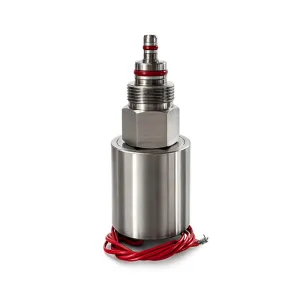
Ultra high pressure solenoid valve
Klasifikasi mereka: Solenoid ValveTampilan: 473Nomor:Waktu rilis: 2026-10-23 16:17:36Nominal diameter: DN6
Structural type: Direct acting
Connection method: Plug in type (M24 * 1 external thread)
Berita
Kategori:
Tidak ada hasil pencarian!
Kasus
Kategori:
Tidak ada hasil pencarian!
Video
Kategori:
Tidak ada hasil pencarian!
Download
Kategori:
Tidak ada hasil pencarian!
Rekrutmen
Kategori:
Tidak ada hasil pencarian!
Produk yang direkomendasikan
Tidak ada hasil pencarian!



 ada apa
 Telepon